Understanding Betting Advertising and Probability Claims
Learn how betting advertising and probability claims mislead, and why risk literacy matters more than any single tip.
How to Read a Betting Ad
A "risk-free bet" banner is not risk-free. The stake comes back as site credit locked behind a wagering requirement, and the worst case is a week of loss-chasing. Betting advertising probability claims are the engineered gap between what a promotion shows and what the product actually does. The skill here is not reading odds but reading the offer.
This section answers four questions: why wins are shown more than losses, how randomness actually works, how to evaluate profit guarantees, and what bonus design is doing to your behaviour. It teaches risk literacy only. It does not calculate selections, quote odds, or provide strategy. Each guide below answers one of those four questions in full; here you learn which question you are really asking and why the answer changes your next move.
Start with the main guide or open a Advertising and probability question:
- Online Betting Safety Guide
- Why are betting wins shown more than losses?
- What does random mean in gambling?
- Can anyone guarantee a betting profit?
- How do bonuses encourage more gambling?
- Why do near misses feel persuasive?
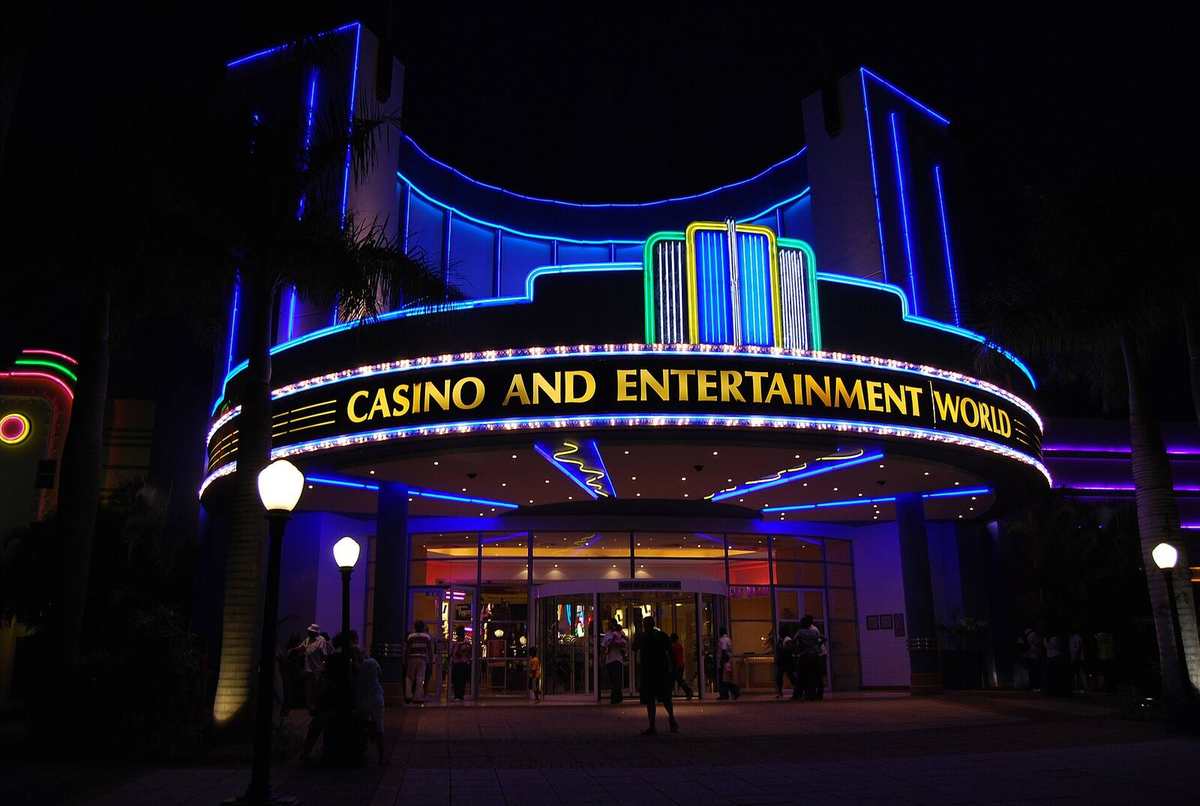

- House edge: Structural and permanent; no user behaviour removes it.
- Wins shown vs losses: Selection bias and testimonial framing hide the losing base rate.
- Independence of events: Previous outcomes do not change the probability of the next one.
- Bonus cash value: Always reduced by wagering requirements before you can cash out.
- Risk-free bet reality: Stake returned as credit, not withdrawable cash, often after a loss.
Why Wins Are Shown More Than Losses
Start with a simple accounting question: where are the losing tickets? Every affiliate site, every operator feed, every testimonial you see is a curated sample. A winning bettor is a story worth publishing; a losing bettor is a churn statistic. Selection bias means the evidence you are shown has already filtered out the base rate of losses. The advertised experience is not a sample of the product but of its best outcomes.
Testimonial framing does the same work at the level of language. A banner quoting someone who turned a small deposit into a large win in one day is not lying about that person. It is lying about representativeness. For every account that hits that outcome, the operator's own margin requires many more that do not. Treat every promoted win as a single data point with no denominator. Ask what the denominator would have to be for the operator to still profit. That question, not the win, is the information.
What Actually Counts As Evidence
An odds comparison is evidence about price, not about your outcome. A payout screenshot is evidence that one payout happened, not that payouts are common. A losing streak is evidence about variance, not about a coming win. Sort promoted content into these three buckets and almost all of it lands in the first two. None of it tells you what your next month looks like.
Gambling Randomness Explained
Independence of events is the single concept that undoes most betting advertising. Each spin, each hand, each match outcome is generated without memory of the previous one. A coin that has landed heads five times is not due for tails. A roulette wheel that has shown red eight times has no obligation to show black. The machine is not warming up, cooling down, or learning your habits.
The streak misconception is the human error built on top of that fact. You see a pattern because pattern detection is what your brain does with any sequence. But in a game designed around independence of events, the pattern is an artifact of attention, not a property of the game. Loss-chasing is what happens when the streak misconception meets a losing session: you believe the next bet is more likely to win because the last five lost. It is not. The probability is the same as it was before the streak started, and the house edge is still taking its cut on every attempt.
Why the House Edge Matters
House edge is the structural reason this matters. It is not a fee you can avoid by playing better. It is the mathematical margin built into every price, every payout, every bonus term. You do not beat it by understanding randomness. You understand randomness to see why beating it is not a skill problem.
Guaranteed Profit Betting Warning
Any claim of guaranteed profit in betting is either a scam, a misunderstanding, or a promotion with hidden conditions. The first two are easy to dismiss. The third is the one that catches people. A "guaranteed profit" offer usually means a free bet or a matched top-up, and the guarantee is not cash in your account. It is a promise that some asset has been added to a balance you cannot cash out yet.
The wagering requirement is the mechanism that turns a guarantee into a liability. A bonus with a five-times rollover means you must bet five times the bonus before any cash-out. The house edge applies to every one of those bets. By the time the requirement is met, the expected cash value of the bonus is lower than its advertised value, and in many cases negative. The guarantee was on the sticker, not on the product.
Who Profits From the Promise
Affiliate marketing makes this worse. A site earning commission for sending you to an operator has a direct incentive to frame the offer as free money. The affiliate is paid on your deposit, not on your cash-out. When the people describing a guarantee are paid by the company that would lose money if the guarantee were real, the guarantee is advertising, not evidence.
Betting Bonus Behavioural Design
Bonuses are not gifts. They are behavioural nudges built around funding triggers and cash-out friction. A funding trigger is any design element that prompts you to move money before you have decided to bet: a countdown timer, a "limited time" bonus, a notification that your balance is low. The trigger is placed at the moment of maximum impulse, when the delay between wanting to bet and being able to bet is shortest.
Cash-out friction is the other half of the same design. It is easy to pay in and hard to get money out. KYC checks, source of funds requests, and bonus terms all activate at the withdrawal stage, not at signup. The operator is not inefficient; the friction is placed where it protects revenue. You can fund an account in thirty seconds and wait a week to collect. That asymmetry is not an accident of regulation; it is a feature of the product.
The Risk-Free Bet Trap
A risk-free bet is the clearest example of both. The offer triggers a payment, then returns the stake as site credit that carries its own wagering requirement. The "risk" was transferred from the bet to the cash-out. You did not lose the bet; you lost access to the money.
| Field | What The Advertising Says | What The Terms Actually Mean |
|---|---|---|
| Risk-free bet | No risk | Stake returned as credit after a loss, not as cash |
| Withdraw anytime | Full access to funds | KYC and source of funds checks delay cash-outs after wins |
| Deposit limit | Hard cap on spending | Per payment method or per brand, not per person |
| Licensed operator | Consumer protection | Regulatory compliance, not product fairness or low harm |
How To Evaluate Any Probability Claim
Odds literacy is not about calculating implied probability from a price. It is about asking three questions of any claim you see. First: what is the denominator? A win rate of forty percent means nothing without knowing how many bets that rate was observed over. Second: who is publishing the claim, and how are they paid? An affiliate site and an independent harm charity have different incentives, and the claim inherits those incentives. Third: what would the claim look like if the opposite were true? If a strategy truly guaranteed profit, the operator would close the account, not pay an affiliate to send more people to it.
Probability is the honest language of betting, and it is almost never used in advertising. Advertising uses certainty, urgency, and social proof. The house edge is a probability statement. The paytable is a probability statement. The terms and conditions are a probability statement. Everything else is a behavioural nudge wearing the language of odds.
The Denial Test
Before acting on any offer, write down one sentence describing what you expect to happen. If you cannot write it, you do not understand the offer. If you can write it, compare it to the terms. The gap between your sentence and the terms is the advertising. That gap is the only thing you are being sold.
More in this guide
Why do near misses feel persuasive?Why are betting wins shown more than losses?How Betting Bonus Design Encourages More Gambling.
More in Advertising and probability
-
 Can anyone guarantee a betting profit?
No one can guarantee a betting profit. The house edge is structural, and profit guarantees are a warning sign of a scam.
-
 How do bonuses encourage more gambling?
Betting bonuses use wagering requirements, expiry pressure, and withdrawal holds to encourage more gambling, not to give value.
-
 What does random mean in gambling?
Randomness in gambling means each event is independent. Streaks feel meaningful but do not change future probabilities.
-
 Why are betting wins shown more than losses?
Betting ads show wins more than losses because of selection bias and testimonial framing, not because winning is common.
-
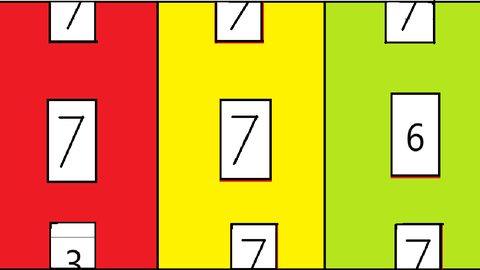 Why do near misses feel persuasive?
A near miss in betting is a cognitive event that feels like a win but is a loss. Learn the mechanism and how to interrupt it.
Common Questions
Why do betting sites show more wins than losses?
Selection bias. Winning stories are published; losing stories are churn data. The feed you see is filtered to the best outcomes, not a sample of the product.
What does a risk-free bet actually cost?
The stake is returned as site credit, not cash, and often only after a loss. You must then bet the credit through a wagering requirement before you can cash out.
Can I beat the house edge with a system?
No. Independence of events means previous outcomes do not change future probabilities. The house edge is structural and applies to every bet.
Why is it easy to deposit but hard to withdraw?
Cash-out friction is placed at the point of withdrawal, not signup. KYC and source of funds checks protect operator revenue, not your access to funds.
Read next
-
Why do near misses feel persuasive?
A near miss in betting is a cognitive event that feels like a win but is a loss. Learn the mechanism and how to interrupt it.
-
Why are betting wins shown more than losses?
Betting ads show wins more than losses because of selection bias and testimonial framing, not because winning is common.
-
What does random mean in gambling?
Randomness in gambling means each event is independent. Streaks feel meaningful but do not change future probabilities.
-
How do bonuses encourage more gambling?
Betting bonuses use wagering requirements, expiry pressure, and withdrawal holds to encourage more gambling, not to give value.
-
Can anyone guarantee a betting profit?
No one can guarantee a betting profit. The house edge is structural, and profit guarantees are a warning sign of a scam.